
In today’s digital-first world, having a strong online presence is no longer optional—it is a necessity. Whether you are a student, solopreneur, startup founder, or established business owner, your website often becomes the first point of interaction between you and your audience. As web technologies evolve, one major debate continues to dominate the website development ecosystem: Coded Websites vs WordPress Websites.
Website development has grown tremendously over the past three decades. Earlier, websites were built only through manual coding using basic technologies. Today, platforms like WordPress CMS have simplified website creation to such an extent that even non-technical users can build professional websites. However, both custom coded websites and WordPress websites have their own strengths, limitations, and ideal use cases.
This blog provides an in-depth, SEO-friendly comparison of Coded Websites vs WordPress Websites, helping you decide which approach best suits your goals, technical skills, budget, and long-term scalability.
Need a Website That Actually Works?
From custom-coded websites to WordPress-powered platforms, we deliver solutions that grow with your business.
What Is Website Development?
Website development refers to the process of building, designing, and maintaining websites for the internet (World Wide Web). It includes front-end development (user interface), back-end development (server-side logic), database management, responsiveness, performance optimization, and search engine optimization.
Web developers are trained professionals who use programming languages, frameworks, and tools to create websites that are functional, visually appealing, and user-friendly. Over time, website development methods have diversified into two major approaches:
Custom or Coded Website Development
WordPress-Based Website Development (CMS)
Understanding these two approaches is essential before making a decision.
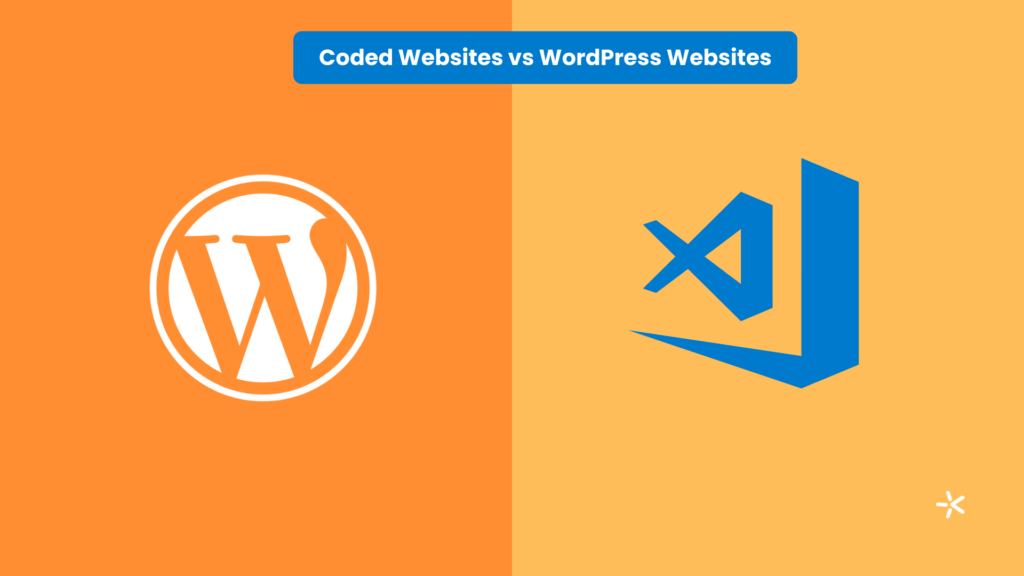
Understanding Coded (Custom) Websites
What Are Coded Websites?
Coded websites are built using traditional programming languages and frameworks. Developers manually write code to create every element of the website—from layout and design to functionality and database connectivity.
Technologies Used in Custom Websites
Custom website development typically involves:
HTML5 – Structure of the webpage
CSS3 – Styling and layout
JavaScript – Interactivity and logic
Frameworks & Libraries – ReactJS, Angular, Bootstrap
Backend Technologies – Node.js, Django, PHP
Databases – MySQL, SQL Server, MongoDB
Text editors such as VS Code, Sublime Text, Atom, and NetBeans are commonly used for coding.
Advantages of Coded Websites
Full design and functionality control
High level of customization
Better performance optimization
Ideal for complex applications
No dependency on third-party plugins
Challenges of Custom Websites
Requires strong coding knowledge
Time-consuming development
Manual SEO implementation
Backend and database integration required
Understanding WordPress Websites
What Is WordPress?
WordPress is an open-source Content Management System (CMS) that allows users to build websites using pre-designed themes and plugins without extensive coding knowledge. It powers a significant percentage of websites globally.
How WordPress Works
WordPress simplifies website development by offering:
Ready-made themes
Drag-and-drop page builders
Plugins for SEO, security, speed, and backups
Built-in database connectivity
Automated updates and maintenance
Advantages of WordPress Websites
Beginner-friendly
Faster development
Built-in SEO support
Large community support
Responsive templates by default
Limitations of WordPress
Limited deep customization
Plugin dependency
Performance can degrade with excessive plugins
Security depends on updates and plugin quality
History of Website Development: Coded vs WordPress
Website development began with static HTML pages managed only by IT professionals. Over time, dynamic websites, CSS styling, JavaScript interactivity, and backend technologies emerged.
Custom coding remains the foundation of web development even today. However, WordPress emerged as a revolutionary platform that democratized website creation. What started as a blogging tool evolved into a full-fledged CMS powering businesses, blogs, portfolios, and e-commerce platforms.
The Coded Websites vs WordPress Websites debate exists because both approaches evolved to solve different problems.
Designing Capabilities: Custom vs WordPress
Custom Website Design
Design is one of the strongest advantages of custom websites. Developers can create unlimited layouts, animations, and user experiences tailored exactly to client needs. Visual hierarchy, branding, and unique UI/UX can be crafted without limitations.
WordPress Website Design
WordPress offers thousands of free and premium themes. These themes focus heavily on usability and visual hierarchy. While customization is possible, it is often restricted to theme limitations unless additional coding is done.
Responsiveness and Mobile Compatibility
Responsiveness in Custom Websites
Custom websites use CSS media queries and frameworks like Bootstrap to ensure responsiveness across devices such as mobiles, tablets, and desktops.
Responsiveness in WordPress Websites
WordPress themes are responsive by default. The layout automatically adapts to different screen sizes, making WordPress a preferred choice in the mobile-first era.
Responsiveness plays a crucial role in user experience and SEO rankings, making it a non-negotiable feature in modern website development.
SEO Optimization: Manual vs Automated
SEO in Custom Websites
SEO in coded websites must be implemented manually. Developers optimize:
Meta tags
Title tags
URL structure
Keyword placement
Page speed
This offers full SEO control but requires expertise.
SEO in WordPress Websites
WordPress offers built-in SEO-friendly architecture. Plugins like Yoast SEO and Rank Math automate SEO tasks such as sitemap generation, meta tags, and keyword optimization.
This makes WordPress ideal for users focusing on content marketing and digital growth.
Backend Connectivity and Database Management
Custom Website Backend
Developers manually connect front-end interfaces to databases using backend technologies. This requires knowledge of APIs, server-side logic, and database architecture.
WordPress Backend
WordPress automatically handles backend connectivity. The database is pre-integrated, allowing users to manage content without worrying about server-side logic.
Comparison Table: Coded Websites vs WordPress Websites
| Parameter | Custom (Coded) Websites | WordPress Websites |
|---|---|---|
| Website Type | Static & Dynamic | CMS-Based |
| Technical Knowledge | Required | Not mandatory |
| Development Time | Longer | Faster |
| Customization | Unlimited | Limited |
| Responsiveness | Manual | Automatic |
| SEO | Manual | Automated |
| Backend Setup | Manual | Built-in |
| Maintenance | Developer-managed | CMS-managed |
| Ideal For | Developers, Students | Businesses, Entrepreneurs |
Who Should Choose What?
Choose Custom Websites If:
You are a developer or student
You want full control
You are building complex web applications
Performance is critical
Choose WordPress Websites If:
You are a business owner
You need fast deployment
Content management is a priority
You have limited technical knowledge
Digital Marketing and Website Development
Digital marketing and website development go hand in hand. WordPress has become a preferred platform for digital marketers due to its SEO-friendly nature, content publishing ease, and plugin ecosystem.
Custom websites, on the other hand, are preferred for high-performance marketing platforms and enterprise-level solutions.
Conclusion
The debate of Coded Websites vs WordPress Websites does not have a one-size-fits-all answer. Custom websites offer unmatched flexibility, control, and scalability but demand technical expertise and time. WordPress websites provide speed, simplicity, and automation, making them ideal for non-technical users and growing businesses.
Ultimately, the right choice depends on your goals, skills, timeline, and budget. Both technologies play a vital role in modern web development, and understanding their strengths helps you make an informed decision.
Ready to Build the Right Website for Your Business?
Still confused between a Coded Website and a WordPress Website?
Let our experts help you choose the perfect solution based on your goals, budget, and scalability needs.